
A suitcase survives real travel when its wheels, zippers, handle, and shell can take repeated baggage-handler drops, overstuffed packing, and rough tarmac without failing on trip three. The honest answer is that most suitcases look nearly identical in a showroom and only separate themselves after a few checked flights, so the smart move is judging construction details — not brand names or shiny finishes — before you buy.
What “surviving real travel” actually means
Airline baggage handling is not gentle. Bags get thrown onto conveyor belts, stacked under heavier cases, dragged across concrete, and occasionally left out in rain or snow on the tarmac. A suitcase that only gets tested by a smooth pull across a store floor tells you almost nothing about how it performs after that treatment. The failures that actually end a suitcase’s life are predictable: a wheel snaps off, a zipper pull separates, a telescoping handle jams or bends, or a corner cracks after being dropped once too often. Buying with those specific failure points in mind is more useful than chasing a general reputation for “toughness.”
Hard shell vs. soft shell — the real trade-off
Hard-shell cases (usually polycarbonate, ABS, or a blend) resist scuffs, shed water, and protect fragile items better, but they can crack under a sharp impact and don’t flex to fit an overpacked bag. Soft-shell cases (nylon, polyester, ballistic weaves) absorb impact better, squeeze into tight overhead bins, and often have more exterior pockets, but they’re more vulnerable to tears, water, and general wear on the fabric over years of use. Neither is objectively better — it depends on how you travel. Frequent checked-bag flyers who want protection from rough handling often lean hard shell; people who mostly gate-check or use trains and cars often prefer the flexibility of soft shell. This is the same durability-versus-flexibility trade-off that comes up when picking a daily bag, and the same logic used in a guide to what matters when buying a backpack for daily use applies here: the “best” material depends entirely on how the bag will actually be used.
Wheels: the part that fails first
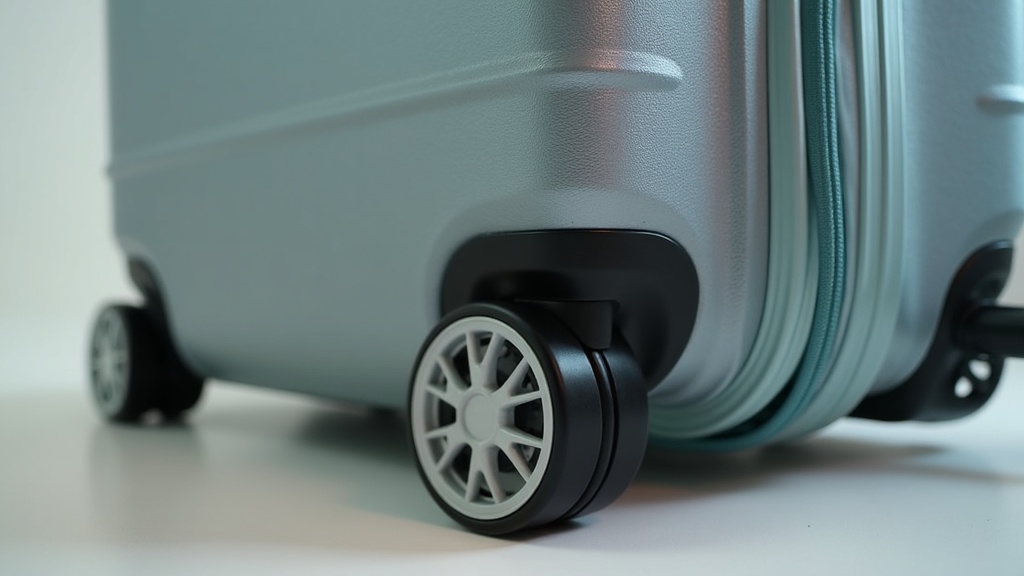
If you ask repair shops what breaks most often on suitcases, wheels top the list. Look for wheels that are recessed or protected by the frame rather than sticking out unguarded at the corners — exposed wheels take the brunt of curb impacts and rough sidewalks. Four spinner wheels offer easier maneuvering through crowded terminals, but two larger inline wheels are often more durable on rough surfaces like gravel, cobblestone, or unpaved curbs, because there’s less to snag or shear off. Check whether the wheels are replaceable; some manufacturers sell wheel-replacement kits, which matters a lot more than the wheel design itself once one actually breaks a few years in.
Zippers, handles, and other failure points
A suitcase is only as strong as its weakest closure. Metal-toothed zippers generally outlast plastic coil zippers under heavy strain, and double zipper pulls with reinforced stitching at the corners resist the tearing that happens when a bag is overstuffed. The telescoping handle should extend and retract smoothly without wobble — wobble now usually means it will bind or snap later. Corner guards, whether molded plastic or reinforced fabric, absorb the impact that would otherwise crack the shell or fray the seams. None of these details show up in a marketing photo, so they’re worth checking in person or reading closely about in product descriptions before buying.
Size, weight, and the packing trade-off
An empty suitcase’s own weight eats into airline weight limits before you’ve packed a single item, so a lighter shell can mean more usable packing weight — but very light materials sometimes sacrifice impact resistance. Measure against your airline’s actual carry-on and checked-bag size limits rather than assuming “standard” sizing, since limits vary by carrier and even by route. If you tend to travel with a mix of carry-on and checked luggage, it’s worth thinking about the whole set together rather than buying pieces one at a time; matching hardware and consistent build quality across a set can simplify decisions later. General household gear buying follows this same logic of matching durability to actual use, which is covered more broadly in the everyday gear and home goods guides on this site.
Warranty and repair support matter more than the label
Because wheels, zippers, and handles are the parts most likely to fail, a suitcase’s warranty terms are often a better predictor of long-term value than its price. Some manufacturers cover manufacturing defects for a limited number of years; others offer more comprehensive coverage against travel damage, sometimes for the life of the bag, though “lifetime” definitions vary and are worth reading carefully. The same due-diligence habits used when comparing appliance warranties before a purchase apply directly to luggage: check what’s actually covered, whether shipping costs for repairs fall on you, and whether the company has accessible customer service rather than just a mailing address. A generous return window also matters here, since a suitcase’s true build quality often only becomes obvious after the first real trip — which is exactly the kind of decision a good return policy is meant to protect against.
Buying secondhand, open-box, or clearance luggage
Suitcases are a category where open-box and floor-model deals can be a genuinely good value, since minor cosmetic wear doesn’t affect how the wheels or zippers perform. Before buying a discounted or open-box case, test the zippers fully, extend and retract the handle several times, spin every wheel, and check every seam and corner for existing cracks. The same checklist used for open-box electronics and floor-model appliances applies almost exactly to luggage — inspect it as if you’re the one who’ll be relying on it at 5 a.m. in an airport, because you will be.
When suitcases tend to be discounted
Luggage often sees markdowns around early summer as travel-season inventory arrives and retailers push last year’s colors and styles, and again in early winter around gift-buying periods. These are general seasonal patterns rather than guaranteed dates, and availability varies by retailer and region. If you’re deciding whether a listed price is genuinely a good one, it helps to compare it against recent price history rather than judging it in isolation — a habit covered in more depth in guides on how price-tracking tools actually work and how to comparison shop without wasting hours checking every store.
Frequently asked questions about choosing a durable suitcase
What suitcase material lasts the longest?
No single material wins outright. Polycarbonate hard shells resist scuffs and water well but can crack under sharp impact; ballistic nylon soft shells absorb impact better but wear at the fabric over years. Longevity depends more on wheel and zipper quality than shell material alone.
Are spinner wheels or two-wheel suitcases more durable?
Four spinner wheels roll more easily through smooth terminal floors but have more exposed parts that can snap on rough surfaces. Two larger inline wheels tend to hold up better on gravel, cobblestone, or uneven curbs, since there’s less hardware sticking out to catch or shear.
How do I know if a suitcase warranty is actually good?
Read what’s covered, not just the length of coverage. A strong warranty explicitly covers wheels, zippers, and handles against normal travel damage, not just manufacturing defects, and doesn’t require you to pay return shipping for every repair claim.
Is it worth buying an expensive suitcase?
Sometimes, but price alone doesn’t guarantee durability. A mid-range case with reinforced zippers, protected wheels, and a solid warranty can outlast a pricier one with weaker hardware. Judge the specific construction details rather than assuming cost predicts longevity.
What should I do if an airline damages my checked suitcase?
Report visible damage to the airline before leaving the baggage claim area and get a written report or claim number. Airlines have specific windows for filing damage claims, so acting immediately matters more than the suitcase’s original price or warranty terms.
For details on passenger rights around damaged or lost checked baggage, the U.S. Department of Transportation’s aviation consumer resources outline what airlines are required to do.
U.S. DOT Aviation Consumer Protection
Shopper Marts publishes general shopping and buying information, not financial advice, and we are not a retailer. We do not verify real-time prices, stock, or sale terms — always confirm current price, availability, and return policy directly with the seller before buying. Product categories, not specific real brands or models, are discussed unless otherwise noted, and nothing here is a guarantee of price or performance.
Related reading
How to Pick Bedding That Actually Holds Up to Washing, What Matters When Buying a Backpack for Daily Use, Choosing Cookware That Will Actually Last, What to Look for in a Good Winter Coat.