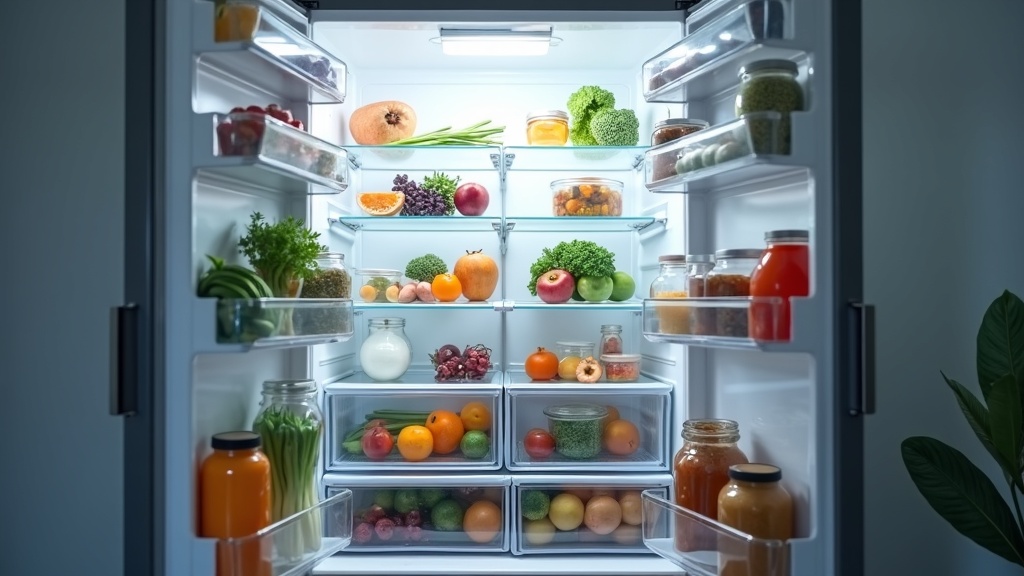
The right refrigerator size depends on three things: how many people you’re feeding, how you shop and cook, and how much space your kitchen actually has for the box to fit and the doors to swing open. As a rough starting point, plan on 4 to 6 cubic feet of fridge capacity per adult in the household, then adjust up if you buy in bulk or cook large batches, and down if your kitchen layout is tight.
Getting this wrong is an expensive mistake either way. Too small, and you’re running to the store every other day or stacking food precariously on top of containers. Too large, and you’ve paid more upfront, used more electricity for years, and possibly jammed a machine into a space it doesn’t quite fit. Here’s how to think through the decision properly before you go shopping.
Start with household size and eating habits
Capacity is usually measured in cubic feet, and manufacturers list both total capacity and the split between fresh food and freezer space. A commonly used rule of thumb is:
- 1-2 people: roughly 10-16 cubic feet
- 3-4 people: roughly 16-21 cubic feet
- 5-6 people: roughly 21-26 cubic feet
- 7+ people or heavy entertainers: 26 cubic feet and up, sometimes with a second freezer
These ranges are guidelines, not hard rules. A household of two who cook elaborate meals from scratch, meal-prep for the week, or host frequently may need more room than a family of four who eats out often and shops daily. Think honestly about your actual patterns rather than the “ideal” household size a chart assumes.
Shopping frequency changes the math
If you do a big warehouse-club run every couple of weeks, you need considerably more capacity than someone who buys fresh groceries three or four times a week. Bulk buying can save money over time, but only if the fridge and freezer can actually hold what you bought before it spoils. If your household leans toward stocking up, that’s a strong argument for sizing up rather than down, and it pairs well with the kind of comparison shopping habits covered in our comparison shopping and price tracking resources — buying in bulk only pays off if nothing goes to waste.
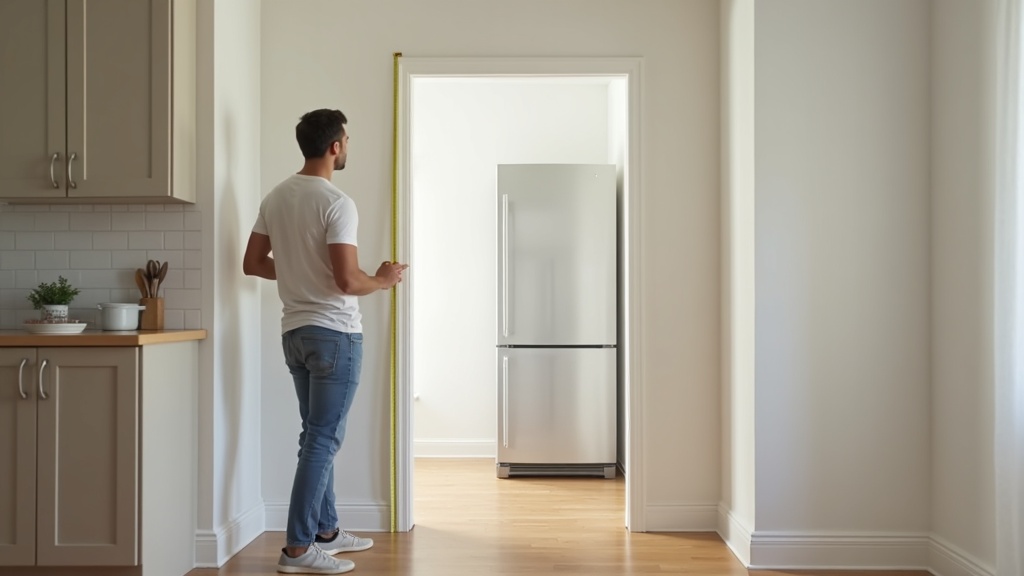
Measure your kitchen space before you fall in love with a model
This step gets skipped more often than it should, and it’s the single most common reason a refrigerator purchase goes wrong. Before you compare features, take these measurements:
- Width, height, and depth of the opening where the fridge will sit, including any cabinets or trim above it.
- Door swing clearance — how far the doors need to open to fully extend the crisper drawers and shelves.
- Path from the entry door to the kitchen, including hallway width and any tight turns, so delivery crews can actually get it inside.
- Water line access if you want an ice maker or water dispenser, since not every kitchen has one already run.
Add at least an inch of clearance on each side and at the top for airflow — refrigerators need space to vent heat, and a unit crammed into a too-tight opening will run less efficiently and work harder over its lifespan.
Counter-depth vs. standard depth
Standard-depth refrigerators typically extend a few inches past most counters, offering more interior capacity for a given footprint. Counter-depth models sit flush with cabinets and counters for a built-in look, but they sacrifice some storage volume to do it. If floor space is tight and appearance matters, counter-depth can be worth the trade-off. If maximizing usable storage matters more than a seamless look, standard depth generally gives you more room per dollar spent.
Configuration affects usable space as much as total capacity
Two refrigerators with the same cubic footage can feel very different in daily use, because layout affects how efficiently you can actually use the space.
| Style | Typical strengths | Typical trade-offs |
|---|---|---|
| Top-freezer | Generally most affordable and energy-efficient per cubic foot | Fresh food section at a lower, less convenient height |
| Bottom-freezer | Fresh food at eye level, often easier for daily use | Freezer drawer can be harder to organize |
| Side-by-side | Narrower doors work well in tight kitchens; good freezer organization | Awkward width for large trays, sheet pans, or platters |
| French door | Wide fresh-food shelves, flexible interior layouts | Usually the priciest configuration for a given capacity |
If you regularly need to fit sheet pans, large casserole dishes, or a full turkey, side-by-side configurations can be frustrating regardless of how many cubic feet the listing advertises. Think about the shapes of items you actually store, not just the total volume.
Don’t forget the freezer
Freezer needs vary just as much as fridge needs. A household that buys meat in bulk, batch-cooks, or stocks up on frozen vegetables during sales needs proportionally more freezer space than one that mostly buys fresh and uses the freezer for ice and the occasional bag of peas. If your freezer needs are unusually high, it may make more sense to buy a smaller combination fridge-freezer and add a standalone chest or upright freezer elsewhere in the home, which is often cheaper per cubic foot than upsizing the whole fridge.
Where sizing fits into the bigger buying decision
Once you know roughly what size and configuration you need, the rest of the decision looks a lot like buying any major appliance. It helps to browse our broader home and appliances buying guides hub for related decisions, since many of the same principles that apply to picking a refrigerator size also apply to choosing the right capacity for a washing machine — our guide on what actually matters when buying a washing machine covers similar space-versus-capacity trade-offs.
Timing matters too. Refrigerators, like most major appliances, tend to follow predictable markdown patterns tied to new model releases and certain shopping holidays — our guide on when to buy appliances for the lowest prices walks through those patterns in more detail. And because prices on the same model can vary noticeably between retailers, it’s worth checking how price-tracking tools actually work before committing to a purchase.
Before you buy, it’s also worth comparing coverage. Refrigerators are a long-term purchase, and understanding what’s actually protected matters — see our guide on how to compare warranties before buying an appliance. If you’re considering an open-box or floor-model unit to save money on a larger size, our open-box and floor-model deals checklist covers what to inspect first. And because a refrigerator that doesn’t fit through your doorway is a real and common problem, double-check the seller’s return policy before delivery day, not after.
A simple way to double-check your choice
Before finalizing a size, walk through this quick checklist:
- Have you measured the opening width, height, depth, and door swing clearance?
- Does the cubic footage match your household size and shopping frequency, not just a generic average?
- Can the delivery path actually accommodate the unit’s dimensions?
- Does the freezer proportion match how much you actually freeze versus refrigerate?
- Have you compared configurations (French door, side-by-side, top or bottom freezer) against the shapes of items you store most?
If you can answer all five confidently, you’re sizing based on how you actually live, not just on what looks impressive in a showroom.
Frequently asked questions about refrigerator sizing
What size refrigerator do I need for a family of 4?
Most households of four do well with somewhere in the 18-22 cubic foot range, though heavy meal-preppers or bulk shoppers may want more. Measure your kitchen opening first, since available space often narrows the choice before household size does.
How many cubic feet per person is ideal for a refrigerator?
A common guideline is 4-6 cubic feet per adult in the household, adjusted upward for bulk shopping or batch cooking and downward for smaller kitchens or households that shop frequently and keep less on hand at any given time.
Is a bigger refrigerator always better?
Not necessarily. A larger unit costs more upfront, usually uses more electricity, and can be harder to fit through doorways or into existing kitchen cabinetry. Size should match actual usage patterns rather than simply choosing the largest model that fits the budget.
Should I measure my kitchen before buying a refrigerator?
Yes, always measure the opening width, height, depth, and door swing clearance, plus the delivery path from your front door to the kitchen. This is the most common reason refrigerator purchases go wrong, even when the cubic footage seems right on paper.
What’s the difference between counter-depth and standard-depth refrigerators?
Counter-depth models sit flush with cabinets for a built-in look but offer somewhat less interior storage for the same footprint. Standard-depth models extend a bit further into the kitchen but typically provide more usable capacity for a similar overall size.
Shopper Marts publishes general shopping and buying information, not financial advice, and we are not a retailer. We do not verify real-time prices, stock, or sale terms — always confirm current price, availability, and return policy directly with the seller before buying. Product categories, not specific real brands or models, are discussed unless otherwise noted, and nothing here is a guarantee of price or performance.