The right water filter is the one certified to remove whatever is actually in your water, not the one with the most impressive marketing claims. Start by reading your local water report, find the contaminants it lists above the health guideline, then match each one to the specific NSF/ANSI standard number built to handle it. Skip that step and you’re guessing. Get it right and the filter aisle stops being confusing.
Start With Your Water Report, Not the Store Shelf
Every public water utility in the United States must send customers an annual Consumer Confidence Report, often called a CCR. It lists what was detected in your tap water over the past year, the levels found, and the federal health limits for each substance. You can usually find a recent copy through your utility’s website, or by searching the EPA’s Consumer Confidence Report page, which also explains how to request one if your provider hasn’t sent it.
If you’re on a private well, no one sends you this report. You’re the utility. The CDC recommends well owners test annually for bacteria, nitrates, and any contaminants common in their region, such as arsenic or radon. Skipping this test means picking a filter with no real data behind the choice.
Once you have numbers in hand, the decision gets simple. You’re not choosing a filter type. You’re choosing a certification that covers your specific list.
The Decision Rule: Contaminant to Certification Number
NSF International and the American National Standards Institute jointly publish the standards that most legitimate filters are tested against. Each standard covers a different category of contaminant. A filter can carry one, several, or none of them. Here’s how to match your report to the standard you need.
| What your report shows | Certification to look for | What it actually covers |
|---|---|---|
| Chlorine taste or odor only, no health violations | NSF/ANSI 42 | Aesthetic effects: taste, odor, and particulates. Not a health claim. |
| Lead, or volatile organic compounds (VOCs) like benzene | NSF/ANSI 53 | Health effects reduction, including lead, VOCs, and certain cysts such as giardia. |
| Arsenic, nitrates, fluoride, or high total dissolved solids | NSF/ANSI 58 | Reverse osmosis systems, which remove a broader range of dissolved contaminants. |
| Hardness minerals (calcium, magnesium) causing scale | NSF/ANSI 44 | Water softener performance, not a health standard. |
| Pharmaceuticals, pesticides, or other emerging contaminants | NSF/ANSI 401 | A newer standard covering compounds not addressed by older certifications. |
| Bacteria or viruses (common after a well test or boil notice) | NSF/ANSI P231 | Microbiological purifiers, a different category from standard filters. |
Notice what this table does. It stops you from buying an NSF 42 pitcher to solve a lead problem. That pitcher will make the water taste better. It won’t touch the lead. This mismatch is the single most common mistake people make, and it happens because taste and safety get marketed as the same thing when they aren’t.
You can confirm a specific product’s certifications through NSF International’s public product listings, which let you search by brand and model to see exactly which standards it passed, not just what the box claims.
Matching Filter Types to the Standards They Can Actually Carry
Once you know which standard you need, the filter format narrows itself down. Not every format can carry every certification.
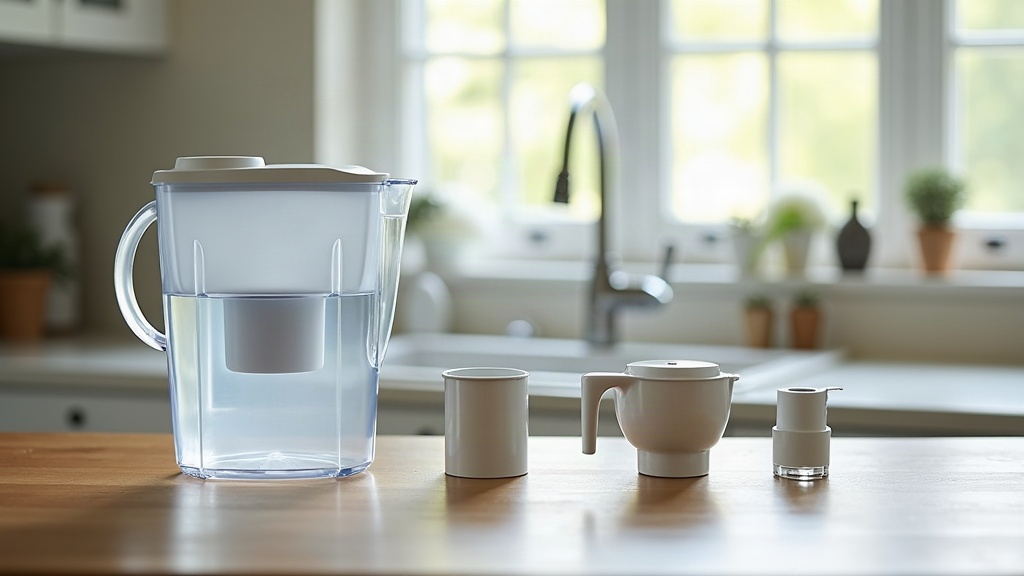
- Pitcher and faucet-mount filters commonly carry NSF 42 and sometimes NSF 53. They’re cheap and easy to try, but low flow rates mean they treat small volumes at a time. Good fit for chlorine taste and modest lead reduction in low-use households.
- Under-sink filters often carry NSF 53 and sometimes 401. They treat only the cold line feeding one faucet, usually the kitchen tap, so you still bathe and launder in unfiltered water.
- Reverse osmosis systems are the only common home option that reliably carries NSF 58. They waste some water in the process and strip beneficial minerals along with contaminants, which matters if your water is naturally soft already.
- Whole-house (point-of-entry) systems treat everything entering the home, including shower and laundry lines. They can carry NSF 53 or 44 depending on the cartridge, but they cost more upfront and need more plumbing work to install.
None of these formats is universally “best.” A single renter with a chlorine taste complaint needs something very different from a family on a private well with an arsenic result. The format should follow the certification, not the other way around.
What It Costs, and What Drives the Range
Costs vary by brand, cartridge type, and how often filters need replacing, so treat any number here as illustrative, not a quote. A basic pitcher filter with replacement cartridges might run in the $20-40 range for the unit, with cartridges adding a recurring cost every two to three months. An under-sink system with NSF 53 certification often lands higher, and a full reverse osmosis setup higher still once you add the storage tank and extra cartridges. Whole-house systems carry the widest range, since professional installation is usually part of the bill. Always check current listings before assuming any of these figures still apply; filtration pricing shifts with cartridge technology and the categories you’ll find inside a broader buying guide move just as often.
The ongoing cost that catches people off guard isn’t the unit. It’s the cartridge. A filter that ignores its replacement schedule stops meeting its certification entirely, because the test results that earned the certification assumed cartridges get swapped on time. A cheap filter with a $40 annual cartridge cost can end up pricier over three years than a sturdier unit with a $15 annual cartridge. Run the three-year math before buying, not just the sticker price.
Reading the Box Without Getting Fooled
Marketing language on filter packaging is loosely regulated compared to the certification system behind it. Phrases like “removes impurities,” “advanced filtration,” or “healthier water” carry no fixed technical meaning. A specific NSF/ANSI number does. If a product doesn’t list one, that’s not proof it fails, but it is a reason to dig further before buying, the same instinct worth applying across any category covered in the site’s broader buying guides.
A few quick checks before you buy:
- Pull your CCR or well test results and list every contaminant above the guideline.
- Match each one to a standard number using the table above.
- Search the product on NSF’s listing site to confirm it actually carries that standard, not just a similar-sounding one.
- Check the cartridge replacement interval and cost before comparing unit prices.
This process takes maybe fifteen minutes. It saves you from buying a filter that solves the wrong problem.
Private Wells Need a Different Starting Point
Municipal water gets tested constantly and regulated under the Safe Drinking Water Act. Private wells don’t. That puts the testing burden entirely on the homeowner, and skipping it is the most common mistake well owners make. An annual bacteria and nitrate test, plus a one-time check for regional concerns like arsenic or radon, gives you the same kind of baseline a CCR gives a city resident. From there, the same decision table above applies. A well owner with elevated arsenic needs NSF 58, the same as a city resident with an arsenic notice on their CCR. The source of the water doesn’t change which certification solves the problem; only the testing responsibility shifts.
Warranty and Maintenance Realities
Filtration systems, especially whole-house and reverse osmosis units, sit in the same category as other home appliances when it comes to warranty coverage. A unit’s housing might carry a multi-year warranty while the membrane or cartridge is treated as a consumable with no coverage at all. Read the warranty terms the same way you would for a refrigerator or washing machine, a habit covered in more depth in the site’s guide to comparing appliance warranties. Installation errors, particularly on whole-house systems, often void coverage, so a professional install may be worth the added cost if it keeps the warranty intact.
Where Filtration Fits Into a Household Budget
Filter cartridges are a recurring household expense, similar to paper goods or cleaning supplies, and they’re worth planning for rather than buying in a panic when the indicator light turns red. Stocking an extra cartridge or two is a reasonable addition to the kind of rotating household stock discussed in the site’s piece on staples worth stockpiling. If your household already keeps an emergency water supply, it’s also worth cross-checking that plan against the site’s guide to building an emergency supply list on a budget, since filtered tap water and stored bottled water solve slightly different problems.
Before buying any filtration system, it’s worth applying the same comparison habits used for any household purchase: checking multiple listings, reading return policies, and avoiding the first result that shows up in a search. The site’s smart shopping guide covers that process in more general terms, and the same instincts apply just as well here as they do to electronics or appliances.
The Short Version
Pull your water report first. Match each flagged contaminant to its certification number. Buy the format that can actually carry that certification. Then budget for cartridges, not just the unit. That order of operations is the whole difference between a filter that solves your actual problem and one that just makes the water taste nicer while the real issue stays in the glass.
Shopper Marts publishes general shopping and buying information, not financial advice, and we are not a retailer. We do not verify real-time prices, stock, or sale terms — always confirm current price, availability, and return policy directly with the seller before buying. Product categories, not specific real brands or models, are discussed unless otherwise noted, and nothing here is a guarantee of price or performance.