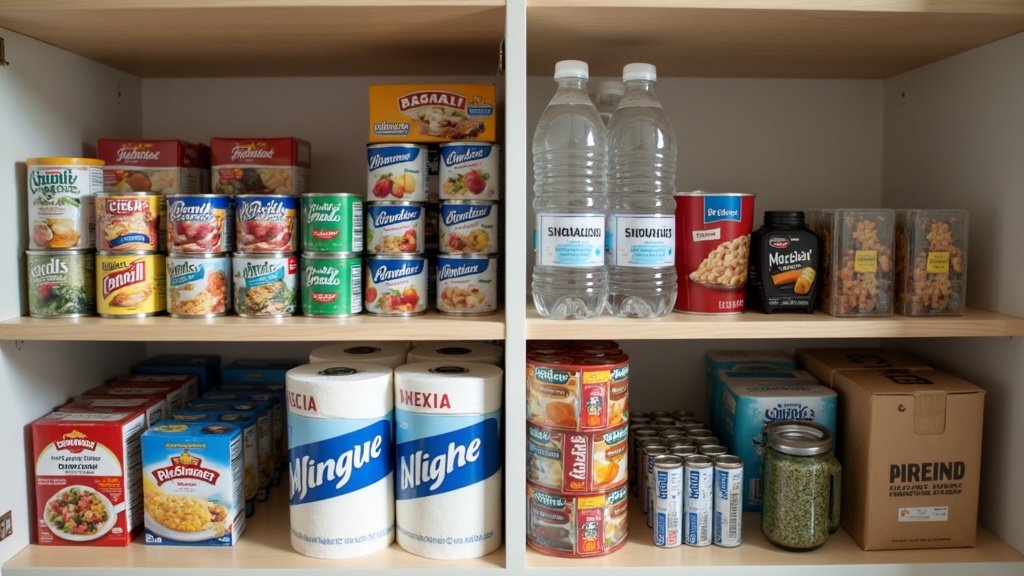
A basic emergency household supply list on a budget covers four things: water, shelf-stable food, a way to handle power outages, and basic first aid and hygiene items — built gradually from what you already buy rather than purchased all at once. Start with a two-week list, prioritize items with long shelf lives, and spread purchases across a few pay periods instead of one large shopping trip. The goal is coverage, not a fully stocked bunker.
Start with a realistic scope, not a worst-case fantasy
Emergency prep advice online often swings toward extremes — either a single flashlight in a junk drawer or enough supplies to survive a year alone. For most households, the useful middle ground is planning for a common, regional disruption: a multi-day power outage, a winter storm, a supply chain hiccup, or a short period where getting to a store isn’t convenient or safe. Government consumer and emergency-preparedness sites generally recommend building toward roughly a two-week supply of essentials for a household, which is a manageable target on a modest budget if you build it in stages instead of buying everything on one receipt.
Before buying anything new, take an honest inventory of what’s already in the house. Most kitchens already have some canned goods, some paper products, and a few batteries lying around. Treat those as your starting point and fill in gaps rather than duplicating what you own.
Build the list in categories, not random items
A scattered list leads to overspending on things you don’t need and gaps in things you do. Organize the list into a small number of categories and fill each one with the cheapest option that still does the job.
Water
Store water for drinking and basic hygiene. Refillable containers you already own, plus a few dedicated water storage jugs, are usually cheaper than repeatedly buying single-use bottled cases. Rotate stored water periodically so it stays fresh.
Shelf-stable food
Canned proteins, beans, rice, pasta, shelf-stable milk, peanut butter, and canned vegetables and fruit form a solid base. These are also everyday grocery staples, so buying a little extra during a normal shop — rather than a special “emergency haul” — keeps the cost blended into your regular budget instead of a separate expense. The hub on grocery and household savings is a good starting point if you want to fold emergency stocking into your normal routine rather than treating it as a separate project.
Power and light
A flashlight or two, a battery-powered or hand-crank radio, and a stock of the right battery sizes cover most outage scenarios without requiring a generator. If a space heater is part of your cold-weather plan, it’s worth reading through safety basics first, since the wrong unit or setup is a real fire risk — see the guide on buying a space heater safely before adding one to the list.
First aid and hygiene
A basic first aid kit, any regular medications you rely on (with a small buffer if your prescriber and pharmacy allow it), soap, hand sanitizer, and extra toilet paper and paper towels round out the basics. Comparing generic versus brand-name paper goods can meaningfully lower this line item without a real difference in performance; the breakdown in paper goods and cleaning supplies: brand vs generic covers where the store brand is genuinely equivalent.
Cash and documents
Card readers and ATMs don’t always work during outages. A small amount of cash on hand, along with copies of key documents (insurance, ID, medical info) in a waterproof bag, costs nothing beyond a little organizing time.
Keep costs down by timing and buying smart, not by cutting corners
The cheapest way to build this list is to avoid urgency. Waiting until a storm warning is issued means shopping under pressure, often at picked-over shelves with fewer choices. Building the list slowly, a few items per grocery trip, spreads the cost and avoids panic buying.
A few practical habits help:
- Buy staples you already use. Extra canned goods, rice, and pasta double as both pantry staples and emergency stock, so nothing goes to waste if it’s never “needed” in an emergency sense.
- Watch for normal sale cycles. Canned goods, batteries, and paper products go on routine promotional cycles throughout the year, unrelated to any looming event. Tracking general timing patterns, covered in the deal timing and sales calendars archive, can help you add to the list during a normal markdown period instead of paying full price during a rush.
- Compare unit prices, not package size. A larger can or box isn’t automatically cheaper per ounce. A quick per-unit comparison, a habit covered across the smart shopping guide hub, keeps bulk purchases from accidentally costing more.
- Consider a warehouse club only if the math works for your household. Bulk sizes can lower per-unit cost on shelf-stable staples like canned goods and paper products, but only if you’ll use the whole quantity before quality drops and you have somewhere to store it. The considerations in warehouse club membership for a small household are worth reading before committing to a membership just for this list.
Don’t let bulk buying create waste
Emergency stocking and bulk buying overlap, but bulk buying only saves money if the items get used before they spoil or you run out of storage space. Canned goods and dry staples last a long time, but they’re not infinite, and cramming a pantry with more than you can rotate through defeats the purpose. The article on when buying in bulk actually saves money walks through how to tell a genuine bulk discount from one that just moves the cost from the store to your kitchen counter in the form of expired food.
Storage matters just as much as purchase price. Food kept in the wrong conditions — too warm, too humid, exposed to pests — degrades faster than its printed shelf life suggests, which erases any savings from buying in bulk. The practical storage tips in how to store bulk purchases without wasting food apply directly to an emergency stock, since the whole point is having supplies that are still good when you actually need them.
For a broader view of which staples are worth keeping extra of at all — versus items better bought fresh as needed — the breakdown in what household staples are worth stockpiling and the wider household staples and bulk buying archive are useful references as you refine the list over time.
A simple starter table
This is a starting framework, not a rigid checklist. Adjust quantities to household size, dietary needs, medications, and any pets.
| Category | Examples | Budget-friendly approach |
|---|---|---|
| Water | Refillable jugs, stored tap water, water purification tablets | Reuse containers you own before buying dedicated storage jugs |
| Food | Canned proteins, beans, rice, pasta, shelf-stable milk | Buy a little extra during normal grocery trips over several weeks |
| Power/light | Flashlights, batteries, battery or hand-crank radio | Standardize on one or two battery sizes to avoid odd leftovers |
| First aid/hygiene | Bandages, basic medications, soap, sanitizer, paper products | Compare generic versus name-brand for near-identical function |
| Cash/documents | Small cash reserve, copies of ID and insurance papers | No cost beyond organizing what you already have |
Frequently asked questions about building an emergency supply list
How much should I spend on emergency supplies at once?
There’s no fixed amount that fits every household, and you shouldn’t need to spend a lot in one trip. Spreading purchases across several grocery visits, buying a few extra shelf-stable staples each time, usually keeps the cost manageable and avoids straining a single paycheck.
What food should I stockpile for emergencies on a budget?
Focus on shelf-stable staples you already eat regularly — canned beans, vegetables, proteins, rice, pasta, peanut butter, and shelf-stable milk. Rotating these into your normal meals and replacing them keeps the stock fresh and avoids buying specialty “survival food” that costs more and may go unused.
How many gallons of water should I store per person?
General emergency-preparedness guidance from consumer and public health sources typically points toward roughly one gallon per person per day for a couple of weeks, covering drinking and basic hygiene. Adjust upward for hot climates, pregnancy, illness, or pets in the household.
Is a warehouse club membership worth it just for emergency supplies?
Usually not on its own. Bulk sizes can lower the per-unit cost of canned goods and paper products, but a membership only pays off if you’ll also use it for regular grocery and household shopping, since the annual fee has to be offset by real savings across the year.
How do I keep emergency supplies from going to waste?
Rotate stock like you would any pantry item: use older cans and packages in everyday cooking and replace them, store everything in a cool, dry, pest-free spot, and avoid buying more than you can reasonably use or rotate through before quality declines.
Shopper Marts publishes general shopping and buying information, not financial advice, and we are not a retailer. We do not verify real-time prices, stock, or sale terms — always confirm current price, availability, and return policy directly with the seller before buying. Product categories, not specific real brands or models, are discussed unless otherwise noted, and nothing here is a guarantee of price or performance.