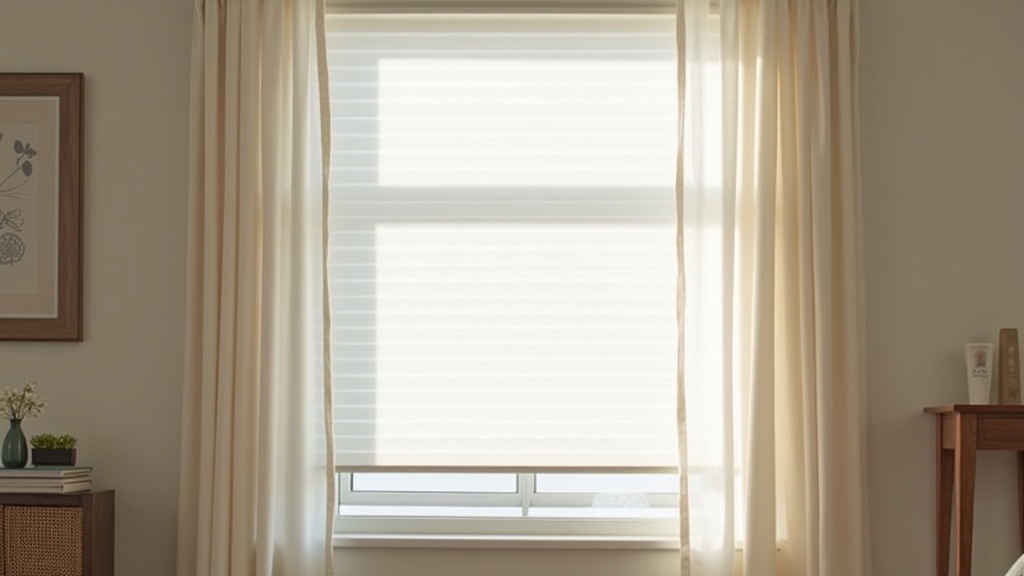
Curtains and blinds actually block heat and light when they combine three things: an opaque or reflective outer layer, minimal gaps around the edges and top, and enough fabric density or cell structure to slow airflow. A single thin panel rarely does the job on its own — the real performance comes from layering (blinds plus curtains), tight-fitting mounts, and materials rated for blackout or thermal insulation rather than just “room-darkening.” The good news is that once you understand what to check, you can compare almost any product against these standards without relying on marketing language.
Why most window coverings underperform
Manufacturers use terms like “blackout,” “room-darkening,” and “energy-efficient” fairly loosely, and there’s no single enforced standard behind them. A curtain can be labeled blackout because the fabric itself blocks light, even though the panel is too narrow to cover the window frame and light leaks in around every edge. Similarly, a cellular shade can be marketed as insulating while still leaving gaps at the sides that let warm or cold air slide right past it. The fabric or slat material matters, but fit and coverage matter just as much, sometimes more.
This is worth keeping in mind if you’re also comparing this purchase against other home upgrades. If you’re weighing a curtain overhaul against something like a space heater for a drafty room, it helps to understand where the actual heat loss is coming from first — our guide on buying a space heater safely covers some of the same airflow and insulation logic that applies to windows.

Blackout vs. room-darkening vs. light-filtering
These three terms show up constantly, and they’re not interchangeable:
- Blackout fabric typically has a tightly woven or foam-backed layer designed to block nearly all light. It’s the best choice for bedrooms, nurseries, or media rooms where you want real darkness during the day.
- Room-darkening reduces light significantly but still allows some glow through, especially around a bright midday sun. It’s a middle-ground option for living spaces where you want dimness without total blackout.
- Light-filtering softens and diffuses light rather than blocking it. It’s good for privacy and glare reduction but does very little for heat control or full darkness.
None of these labels tell you how well the panel will actually cover your window. A blackout fabric on an undersized panel will still let plenty of light in around the sides.
What actually blocks heat
Heat control depends on a different set of properties than light control, even though the two often overlap in marketing copy. Reflective or light-colored outer linings bounce sunlight back before it turns into heat inside the fabric. Dense, multi-layer fabrics (especially those with a foam or thermal backing) slow the transfer of heat through the window in both directions — keeping summer heat out and winter warmth in. Cellular or honeycomb-style shades trap a layer of still air in their pockets, which acts as insulation similar to double-pane glass. A single flat blind slat, by contrast, does very little for temperature regardless of the material, since it doesn’t create a sealed air gap.
Comparing common blind and shade materials
| Material/style | Light blocking | Heat control | Trade-offs |
|---|---|---|---|
| Cellular/honeycomb shades | Good to excellent with blackout lining | Strong, due to trapped air pockets | Can be pricier; harder to clean folds |
| Faux wood/vinyl blinds | Moderate; gaps between slats leak light | Weak on their own | Durable, easy to wipe down, budget-friendly |
| Roller shades (blackout fabric) | Very good if sized to cover the frame | Moderate | Simple mechanism, less bulk than curtains |
| Heavy lined curtains | Excellent when layered over blinds | Good, especially with thermal backing | Bulkier, need more wall/ceiling space |
| Sheer curtains | Poor | Minimal | Best for daytime privacy and glare, not blocking |
Why layering beats any single product
The most reliable setup for blocking both heat and light is a blind or shade mounted close to the glass, paired with a heavier curtain hung outside the window frame. The inner layer handles the fine control — cutting glare, trapping air — while the outer curtain adds bulk, blocks remaining light gaps, and extends past the frame to eliminate edge leaks. This is the same principle behind double-glazed windows: two barriers with a buffer of air between them outperform one thick barrier alone.
If you’re only budgeting for one product this season, prioritize whichever layer addresses your bigger problem. A west-facing bedroom that overheats in summer afternoons benefits more from a reflective or cellular shade close to the glass. A room that just needs to stay dark for shift-work sleep or a nursery benefits more from blackout curtains with full frame coverage.
Measuring and mounting for real coverage
Fit is where a lot of otherwise good products fail. A few practical rules:
- Mount curtain rods several inches wider than the window frame so the panels can close over the wall, not just the glass.
- Choose panels wide enough that, when closed, they overlap in the middle with a few extra inches of fabric on each side.
- For blinds and shades, measure for an “outside mount” (covering the frame) rather than an “inside mount” if edge light or drafts are a concern — outside mounts leave fewer gaps.
- Check for a snug fit at the top of the window; heat and light both escape most easily through gaps above the treatment, not just the sides.
None of this requires professional installation, but it does require actual measuring rather than guessing based on the window’s advertised size.
Shopping smart without overpaying
Window treatments are a category where comparison shopping pays off, since similar-looking products can vary widely in fabric weight, lining quality, and mounting hardware. It’s worth checking a few listings side by side rather than buying the first blackout curtain that comes up in a search — our guide on how to comparison shop without wasting hours covers a quick method for doing this efficiently. If you’re unsure whether a listed discount is meaningful, our piece on telling whether a sale price is actually a good deal walks through how to check a price history before assuming a markdown is real.
Home textiles, including curtains and blinds, tend to follow the same broader seasonal patterns as other home goods — often discounted alongside furniture during transitional seasons when retailers refresh home decor lines, a pattern covered in our guide on when furniture actually goes on sale. If you want a broader view of when retailers tend to mark down entire home categories, the Deal Timing & Sales Calendars hub is a useful starting point, and the Comparison Shopping & Price Tracking archive has more on tracking prices over time rather than reacting to a single sale tag.
Before buying, it’s also worth checking the seller’s return window, since fabric color and light-blocking performance can look different once the panels are actually hanging in your room. Our guide on how return policies should factor into buying covers what to confirm before you commit, especially for larger or custom-sized orders that may not be easy to send back.
Frequently asked questions about blocking heat and light with curtains and blinds
Do blackout curtains really block heat too?
Blackout curtains block light effectively because of their dense weave or foam backing, and that same density does slow some heat transfer, but they’re not primarily designed as insulators. For real heat control, pair them with a cellular shade or reflective lining, and make sure the panel is wide enough to cover the whole window frame.
Are cellular shades better than blinds for heat control?
Yes, generally — cellular or honeycomb shades trap a layer of still air in their pocketed structure, which insulates similarly to double-pane glass, while flat slat blinds don’t create that sealed air gap and do much less for temperature regardless of material.
What’s the difference between blackout and room-darkening curtains?
Blackout curtains use a tightly woven or foam-backed fabric meant to block nearly all light, while room-darkening curtains reduce light significantly but still let some glow through, especially in bright midday sun. Blackout is better for full darkness; room-darkening suits general living spaces.
Should I get curtains, blinds, or both?
Layering both usually performs best: a blind or shade close to the glass handles fine light and heat control, while a heavier curtain mounted outside the frame blocks remaining gaps and adds bulk insulation. If budget only allows one, match the product to your bigger problem — heat versus light.
How do I stop light from leaking around the edges of curtains?
Mount the rod several inches wider than the window frame so panels close over the wall rather than just the glass, choose panels wide enough to overlap slightly when closed, and check for snug coverage at the top, since gaps above the treatment leak the most light and heat.
Shopper Marts publishes general shopping and buying information, not financial advice, and we are not a retailer. We do not verify real-time prices, stock, or sale terms — always confirm current price, availability, and return policy directly with the seller before buying. Product categories, not specific real brands or models, are discussed unless otherwise noted, and nothing here is a guarantee of price or performance.