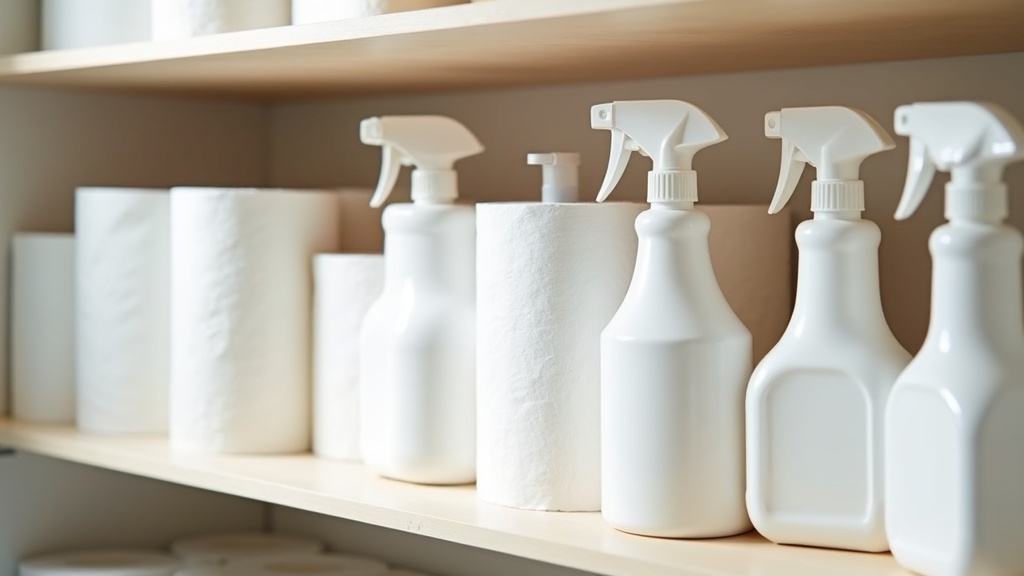
For most paper goods and cleaning supplies, generic and store-brand versions perform close enough to name brands that the price difference isn’t worth paying — especially for toilet paper, basic all-purpose cleaners, and dish soap. The gap gets more noticeable in a few specific spots: paper towel absorbency and strength, and certain specialty cleaners with a particular active ingredient or scent formula you’ve grown to rely on. The trick is knowing which category you’re standing in front of before you decide.
Where the difference is mostly marketing
Toilet paper, facial tissue, napkins, and general-purpose cleaning sprays are commodity products. Manufacturing standards across the industry are similar enough that a store-brand roll and a name-brand roll are often made in comparable facilities, sometimes by the same handful of paper mills that supply multiple labels. The visible differences — softer quilting patterns, printed designs, scented varieties — are cosmetic add-ons, not indicators of underlying quality. This is the same logic that applies across the grocery aisle more broadly, which we cover in more depth in Generic vs Name-Brand Groceries: Where It Matters.
Basic cleaning products follow a similar pattern. Glass cleaner, all-purpose spray, dish soap, and laundry detergent all have to meet the same functional job: cut grease, lift dirt, rinse clean. Store brands frequently use very similar surfactant chemistry to their name-brand counterparts, sometimes contract-manufactured by the same companies that make the branded version. You’re often paying for advertising and shelf placement, not a meaningfully different formula.

Where brand differences can actually show up
Paper towels are the clearest exception. Sheet thickness, ply count, and the way the paper is embossed genuinely affect absorbency and tear resistance, and this varies more between brands — including between store brands — than most people expect. A thin, single-ply generic roll may cost less per sheet but require using two or three sheets to do the job of one higher-quality sheet, which erases the savings fast. This is one category worth actually testing rather than assuming.
Specialty cleaners are the other exception. If you’re dealing with hard water stains, specific mold and mildew issues, or a fragrance sensitivity, the active ingredient concentration and formulation can matter more than in a general-purpose spray. Some name-brand specialty cleaners use a patented or harder-to-replicate active ingredient blend that generics haven’t matched. If a specific product genuinely solves a problem others don’t, that’s a legitimate reason to stick with it — just don’t assume that logic applies to the rest of your cleaning cabinet too.
How to compare without guessing
A few practical checks help you tell the difference between real quality and packaging design:
- Check the unit price, not the package price. Compare cost per sheet, per roll, or per ounce rather than the price on the shelf tag, since package sizes vary between brands.
- Look at sheet count and dimensions on the label. A “bigger” roll with smaller sheets isn’t actually more product.
- Read the active ingredient list on cleaners. Two products with the same active ingredient at a similar concentration will typically perform similarly regardless of brand.
- Buy a small size first when trying a new store brand. Testing a smaller package before committing to a bulk quantity avoids ending up with a large pack of something that doesn’t hold up.
- Watch for concentration differences. Some cleaners are sold in concentrated form meant to be diluted; comparing those directly to a ready-to-use spray on price alone is misleading.
These same habits carry over well into other parts of the grocery and household budget — our smart shopping guide hub has more on comparison shopping techniques that work across categories, not just paper goods.
A rough comparison by category
| Category | Generic usually fine? | Worth testing brand differences? |
|---|---|---|
| Toilet paper | Yes, for most households | Only if sensitive to ply/texture |
| Paper towels | Sometimes | Yes — absorbency varies noticeably |
| Facial tissue | Yes | Only for very sensitive skin/lotion tissues |
| All-purpose cleaner | Yes | Rarely necessary |
| Dish soap | Yes | Rarely necessary |
| Specialty/stain cleaners | Sometimes | Yes, if a specific active ingredient works better for you |
| Laundry detergent | Yes | Only for fragrance/sensitivity needs |
Buying in bulk changes the math
Once you’ve settled on which generic swaps work for your household, bulk buying can stretch the savings further — paper goods and shelf-stable cleaners are among the easier categories to stock up on since they don’t spoil. If you’re weighing whether a larger pack actually pencils out, When Buying in Bulk Actually Saves Money walks through the math in more detail, and What Household Staples Are Worth Stockpiling covers which non-food items are worth keeping extra of on hand. If a warehouse club membership is on the table specifically for household basics like these, it’s worth reading through Warehouse Club Membership for a Small Household before committing to the annual fee, since a smaller household may not use enough volume to make it worthwhile.
More broadly, this category fits into the wider household staples conversation covered in our Household Staples & Bulk Buying archive, and the overall grocery and household budget picture is covered from the top down at the grocery and household savings hub.
Reading labels and ingredient safety
If you’re comparing cleaning products for environmental or health reasons — not just price — it can help to check whether a product participates in a recognized safer-formulation program. The U.S. Environmental Protection Agency’s Safer Choice program lists criteria for cleaning products formulated with safer chemical ingredients, which can be a useful reference point regardless of whether the product is a name brand or store brand.
Frequently asked questions about brand vs generic paper goods and cleaners
Is store brand toilet paper as good as name brand?
For most households, yes — store brand toilet paper performs comparably to name brands in day-to-day use. The main differences are texture and ply thickness, which come down to personal preference rather than a real functional gap, so it’s worth trying a smaller package before buying in bulk.
Do generic paper towels absorb as well as name brand?
Not always. Paper towels are one category where sheet construction genuinely varies between brands, including store brands, so a cheaper roll can end up costing more if you need extra sheets to do the same job. Testing a small pack before buying in bulk is the safest approach.
Are generic cleaning products as effective as name brand?
For general-purpose cleaners, dish soap, and laundry detergent, generics with similar active ingredients typically perform comparably to name brands. Specialty cleaners aimed at specific problems, like certain stains or mold, are more likely to have a real formulation difference worth checking ingredient labels for.
Why is name brand paper towel more expensive?
Higher price often reflects marketing, brand recognition, and sometimes genuinely thicker or more absorbent sheet construction. Comparing unit price alongside sheet count and thickness — rather than assuming the higher price always means better performance — is the more reliable way to judge value.
Should I buy cleaning supplies in bulk to save money?
Bulk buying works well for shelf-stable paper goods and concentrated cleaners since they don’t expire quickly, but only if you have storage space and will actually use the volume before running out of room. It’s worth checking the per-unit savings against your realistic usage rate first.
Shopper Marts publishes general shopping and buying information, not financial advice, and we are not a retailer. We do not verify real-time prices, stock, or sale terms — always confirm current price, availability, and return policy directly with the seller before buying. Product categories, not specific real brands or models, are discussed unless otherwise noted, and nothing here is a guarantee of price or performance.